Top Sellers
Top 50 Best Newest Supplements Top Protein Top Pre-Workout Top Post-Workout Top Fat Loss Top Intra-Workout Top Health & Wellness
Bodybuilding Books
Workout Accessories
Videos
Workout Music
Ads




 By: MuscleSports.net
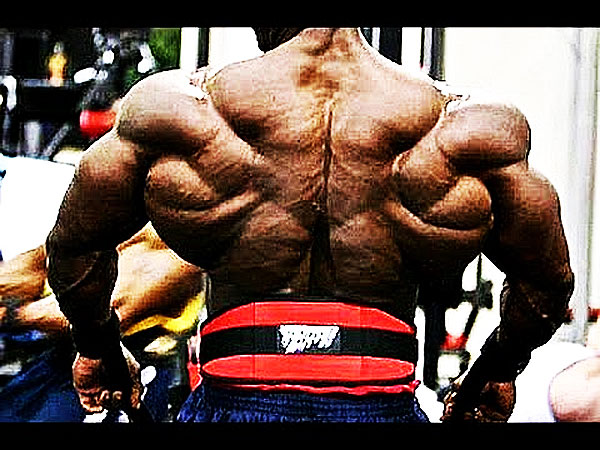 Gentlemen, we are living in an age of information overload. Every influencer with a camera and a shaker cup is preaching the gospel of "mind-muscle connection" while performing cable crossovers with ten-pound dumbbells. They're sculpting, they say. They're "refining."
Let me tell you what they're “NOT” doing: they're not building slabs of meat on their backs.
In the hallowed pages of Joe Weiders old copies of Muscle Builder (circa 1974), they understood a simple truth: mass comes first, and refinement comes second. You cannot chisel a masterpiece from a pebble. You must start with a boulder.
This treatise is a re-issue of a classic blueprint — a 2009 lesson from Scott L. who wanted to know why his back didn't look like a cobra ready to strike. The answer was simple: he was playing with machines when he should have been wrestling with iron.
Here is the golden rule for the 21st-century bodybuilder: In the off-season, you build. In the contest prep, you reveal. Modern sports science supports this; muscle hypertrophy is driven by mechanical tension — the heavy, ballistic effort that only free weights truly provide. We are going to take old-school knowledge and supercharge it with today's science to forge a back that is thick, wide, and utterly dominant.
The off-season is your time to be a barbarian. You are not trying to look good; you are trying to get *big*. We are going to utilize compound movements to stimulate the highest motor unit recruitment. Forget the machines that hold your hand; it is time to get ballistic.
Choose three exercises per workout from the list below. Your protocol is strict: one warm-up set followed by four working sets. You will pyramid the weight up each set until you are grinding out eight hard reps on your final set.
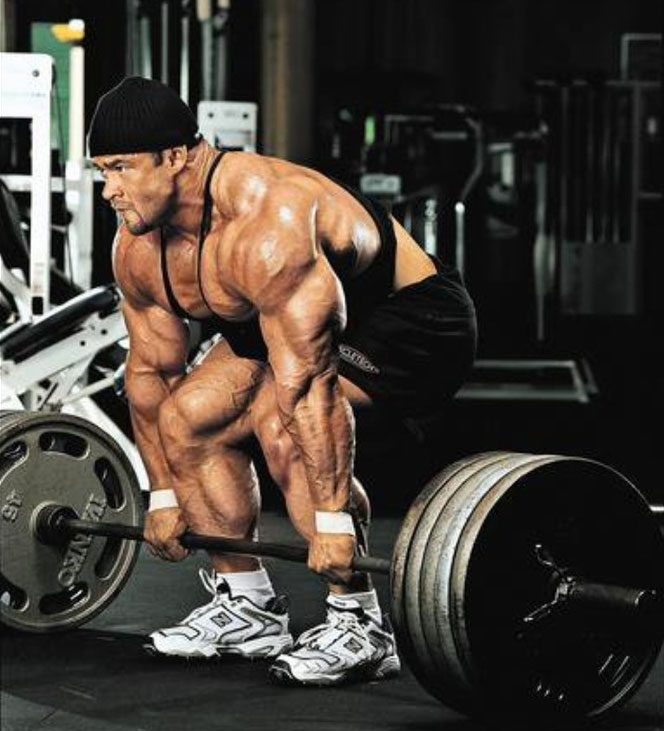
We are going back to the basics. No, not the Sumo stance. We are talking conventional, shoulder-width apart, ass to the grass (well, as low as you can manage), back flat, and chest up. Pull the bar off the floor as if you are trying to tear a hole in the floorboards. Chalk your hands, ditch the straps (for these, at least), and let your grip build alongside your spinal erectors. This is the father of all back movements. It is the foundation of thickness that radiates from your spine outward. Arnold knew it; so did Dorian. Modern strength coaches concur; this exercise builds the posterior chain like nothing else.
Protocol: 2 warm-up sets of 10 reps, followed by 3 working sets of 5-6 heavy reps.We said “chins”, not pulldowns. There is a profound difference. Pulldowns are for detailing; chins are for building slabs of meat. If you are doing pulldowns and have no back muscle to show for it, you are cheating yourself. Grab the bar with an underhand grip, hands about 12–14 inches apart. The close underhand grip shifts the emphasis to the lower lats and biceps. As you pull, arch your back and try to touch the bar to your mid-chest, not your chin. Squeeze the lats like you are squeezing a lemon. Use straps if you must to keep your mind on the muscle, not the grip.
Protocol: 1 warm-up set of 10 reps, followed by 3 working sets of 10–12 reps. Add weight with a dipping belt as needed.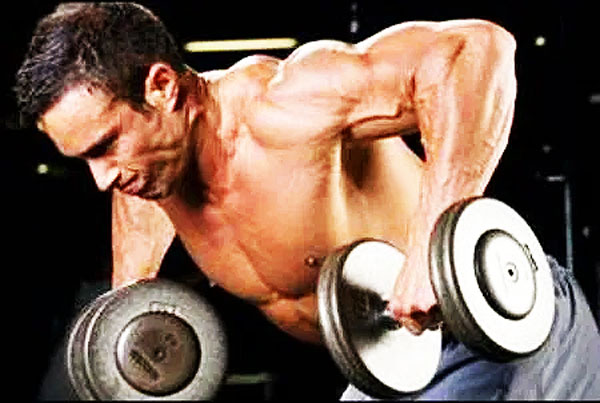
This is NOT the wussy, half-rep, chest-supported row you see on Instagram. This is the old-school, bent-over, brutal version. If you are looking in the mirror and seeing your lower chest, you are standing up too straight. That is a shrug, not a row. Your torso *must* remain between 25 and 35 degrees to the floor. Pull both dumbbells to your abdomen, not your chest. If you cannot hold this form, the weight is too heavy. Lower with control and feel the deep stretch in your lower lats. In modern sport science, this movement ensures a full range of motion, maximizing the eccentric load on the lats and rhomboids.
Protocol: 1 warm-up set of 12 reps, followed by 4 working sets of 8–12 reps, increasing weight each set.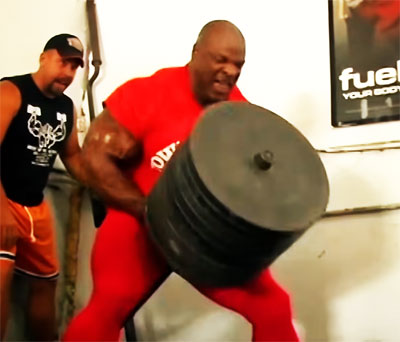
We are talking about the "Ronnie Coleman 1999" style, corner-loaded T-bar rows. Not the machine. You put the bar in the corner, load it with four or five plates, and pull. Use the same principles as the dumbbell row—back flat, head up, 35 degrees. There is a reason T-bar rows are still a staple in gyms; the neutral grip is a powerful pulling position that allows you to overload the back and build density. You can cheat on these to get a few extra reps, but do it under control and with good exercise form.
Protocol: 1 warm-up set of 10 reps, followed by 3 working sets of 8–10 reps.If you must use a cable machine, use it with intent. Flip the V-bar upside down so the point is facing the floor. This changes the angle of pull, hammering the lower lats and the tie-ins. If possible, adjust the cable wheel to its lowest point. Pull the weight toward your belly button, not your chest. Squeeze for a two-count at the peak. The goal isn't momentum; it's a deliberate, controlled contraction. As one experienced lifter noted, focusing on this contraction is the secret to a strong, thick back.
Protocol: 1 warm-up set of 12 reps, followed by 3 working sets of 8–12 reps.| Phase: #1 Mass Workout | |||
|---|---|---|---|
| Exercise Name | Sets | Reps | Rest |
| Power Deadlift | 5 | 5-6 | 120 - 180 Seconds |
| Close-Grip Chin (Underhand) | 4 | 10-12 | 120 Seconds |
| Two-Arm Dumbbell Row | 5 | 8-12 | 120 Seconds |
| Barbell T-Bar Row | 4 | 8-10 | 120 - 180 Seconds |
| Upside-Down V-Bar Cable Row | 4 | 8-12 | 120 Seconds |
Now we enter the contest prep phase. This is where we turn the anvil's work into a work of art. The heavy weights are (mostly) put away. Now, it is about control, detail, and carving the "canyons" that make a champion.
Pick four of these exercises and perform four sets of 12–15 reps. The weight will increase, but never at the expense of form.
Here is the nuance: you will use the *straight* bar, not the crappy angled ones. Reach up, place your hands on the bar, then slide them out another two to three inches. That is your grip. Lower yourself into a dead hang. The key here is to pull with your back, not your biceps. Think about bringing your chest to the bar, not your chin. This forces an arch that works the entire back, from the upper traps to the lower lats. Add weight if you need to, but in contest prep, body weight is often quite sufficient.
Protocol: 1 warm-up set of 10 reps, followed by 4 working sets of 10–15 reps.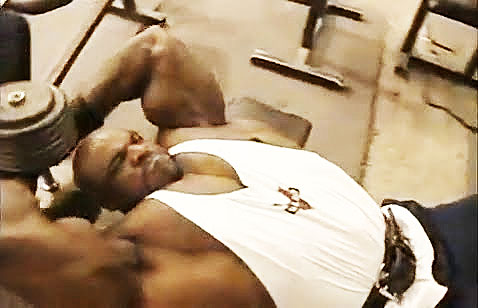
If you aren't doing these, you're missing a secret weapon. The pullover is the "lost" exercise for the lats, intercostals, and serratus. Laying cross-wise on the bench puts the lats in a position to be maximally stretched. Have a spotter hand you the dumbbell. Slowly lower it in an arc behind your head, feeling that deep stretch in your ribcage, then bring it back up. This will tie your lats to your chest and create that sheet of muscle that judges love. If you've never done this movement before, start light and have a spotter ready.
Protocol: 1 warm-up set of 12 reps, followed by 3 working sets of 10–12 reps.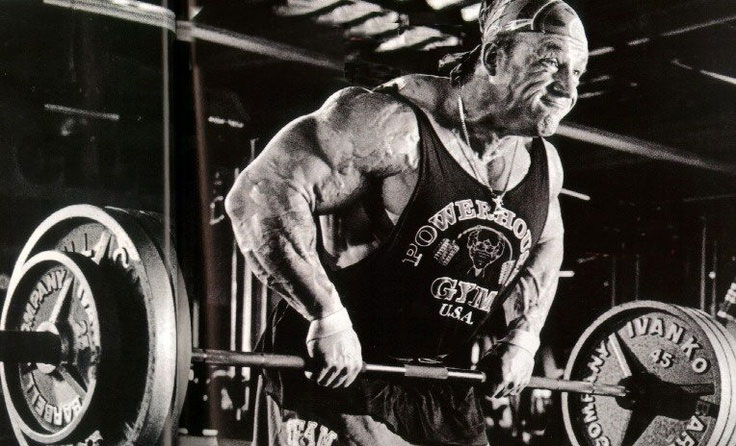
Let's address the modern heresy: the 45-degree angle is NOT for the off-season only. While the 90-degree (Pendlay) row is great for power, the 45-degree bent-over barbell row is the King of back thickness. You pull the bar to your navel, feeling the entire back from the spinal erectors to the traps. This is not an upper-back pull; this is a full-body back extension. Use straps, keep your torso at 50 degrees, and control the negative. It gives you mass *and* detail. Do not go so heavy that you lose control and cannot squeeze at the top; if you can't feel the contraction, the weight is too heavy.
Protocol: 1 warm-up set of 12 reps, followed by 3 working sets of 10–12 reps, pyramiding up in weight.Get rid of that angled bar!!! You are going to use a straight bar, and you are going to pull it *behind* your head. We aren't "ducking" our heads or rounding our backs. Lean forward slightly, arch your chest, and pull the bar down toward the back of your neck. This is the "carver" of deep crevices. It tightens the rear delt-lat tie-in and builds the upper lats for a complete look. Keep the torso upright; do it like the old-school guys—Dorian Yates style. Do not go so heavy that you lose control and cannot squeeze at the bottom.
Protocol: 1 warm-up set of 12 reps, followed by 3 working sets of 12–15 reps, pyramiding up in weight.Why RDLs over conventional deadlifts in contest prep? Olympic lifters use them for a reason. They target the spinal erectors and hamstrings without adding excessive "blockiness" to the waist. Stand with a slight bend in the knee. Push your hips back and lower the bar down your thighs until you feel a massive stretch in your hamstrings. Keep your back locked in a natural arch. This builds the thick, dense lower back that supports all your other movements. The bar should stay in slight contact with your body to avoid straining the lower back.
Protocol: 1 warm-up set of 10 reps, followed by 4 working sets of 8–10 reps.
| Phase: #2 Refinement Workout | |||
|---|---|---|---|
| Exercise Name | Sets | Reps | Rest |
| Straight Bar Chin-Up | 5 | 10-15 | 90 Seconds |
| Cross-Bench Dumbbell Pullover | 4 | 10-12 | 60 Seconds |
| Barbell Bent Row | 4 | 10-12 | 60 Seconds |
| Rear Pulldown (Straight Bar) | 4 | 12-15 | 60 Seconds |
| Romanian Deadlift (RDL) | 5 | 8-10 | 60 Seconds |
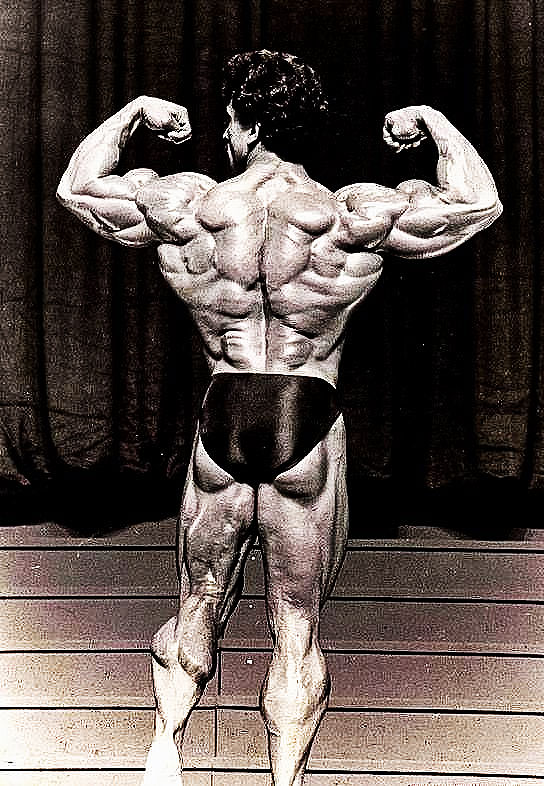
This is the path. The path to a back that is thick, wide, and carved with the detail of a Greek statue. You must earn the right to "sculpt" by first building the clay. The modern lifter spends too much time at the cable station and never enough time under the heavy bar.
Stand up, grab the iron, and build a back that people will remember. Because when you hit that rear double bicep pose, you don't want them to see a collection of lumps; you want them to see the foundation of a champion.
Train hard. Eat harder, and Build Somethin!
Additional Historical & Contextual References (Non-Peer Reviewed)
Tags: bodybuilding life workout programs back

Thank You...

Send Us Your Comments:
The Lost Art of the Lower Lat: Forging a Sweeping V-Taper in Modern Bodybuilding - Comments
Sponsored Products:
Olympian Labs
Beef Protein Isolate
100% Beef Protein Isolate!

Optimum Nutrition
Platinum Rebuild
Post-Workout Protein
BSN
SYNTHA-6 EDGE
Premium Protein Blend!
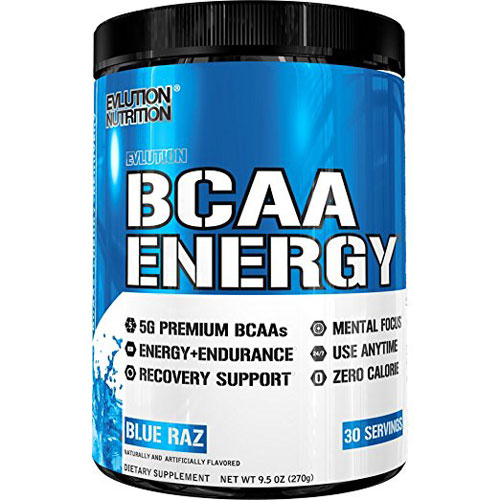
Evlution Nutrition
BCAA Energy
Anytime Energy
Comments:

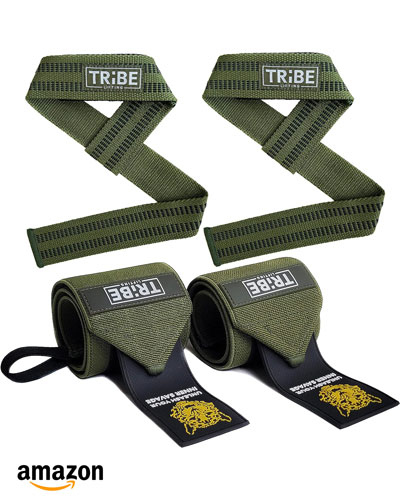
Tribe
Heavy Duty Wrist Wraps and Lifting Straps
21" Wrist Wraps and 24" Wrist Straps
Price: $19.97 Get Yours

Gymreapers
Quick Locking Weightlifting Belt
For Bodybuilding, Powerlifting, Cross Training!
Price: $34.97 Get Yours